A Full-Body Cardiovascular Exercise Suitable for All Fitness Levels.
Rope skipping has quietly become one of the most underrated cardiovascular exercises available to people of every fitness level, yet remarkably few individuals recognize the depth of benefits that come from simply stepping onto a mat and beginning to swing that handle. The appeal extends far beyond the obvious calorie burn, which can easily exceed eight hundred calories per hour for an intense session, because the activity simultaneously builds coordination, sharpens neural pathways and develops a mental resilience that few other forms of exercise can claim to offer. When you commit to a daily rope practice, you are essentially investing in your long-term health while simultaneously discovering a rhythmic freedom that many practitioners describe as moving meditation, a state where the repetitive cadence of each bounce quiets the restless mind and forces you to live entirely in the present moment.
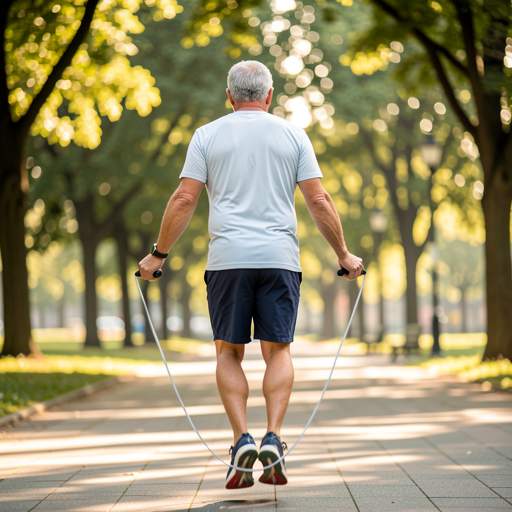
The biomechanics of the exercise reveal why such a deceptively simple movement produces such extraordinary results throughout the entire musculoskeletal system, beginning with the calves and ankles where hundreds of small muscles contract and relax thousands of times per session, building density and resilience in tendons that modern sedentary lifestyles have thoroughly neglected. Your core muscles engage automatically to stabilize the torso against the rotational forces generated by the swinging rope, while your shoulders and forearms develop lean, defined musculature from maintaining proper form, creating a body conditioning effect that rivals much more complicated workout routines. Professional boxers have understood this truth for nearly a century, incorporating rope skipping into their training regimens not merely for cardiovascular preparation but because the footwork patterns directly translate to the lateral agility and balance required to evade opponents inside the ring, demonstrating that this exercise carries practical athletic applications far beyond general fitness.
😉
Finding a suitable routine that keeps you motivated over months and years requires understanding how to vary the fundamental movements, because performing the standard bounce exclusively will eventually lead to both physical plateaus and the psychological boredom that causes so many exercise programs to fail. You might experiment with double unders, where the rope passes beneath your feet twice per single jump, or practice criss-cross patterns that cross your arms in front of your body, or attempt alternate foot stepping that mimics a light jogging motion while still maintaining the steady rhythm that makes the activity so effective.
🤹🏾♀️
These variations prevent repetitive stress injuries by distributing the impact forces across different muscle groups and joint angles, while simultaneously providing the mental stimulation that comes from learning new motor skills, making each workout feel genuinely novel rather than a tedious repetition of the same routine you performed the previous day. The social dimension of rope work has experienced a remarkable renaissance in recent years, driven largely by competitive organizations that host regional and national tournaments. Many of those competitors train with a loop jump rope and build elaborate routines set to music, complete with intricate choreography that transforms what was once viewed as children's playground activity into a legitimate athletic performance art.
❤️
Online communities have flourished alongside these competitive structures, with practitioners sharing training progressions, equipment reviews and innovative routines across multiple platforms, creating a supportive ecosystem that welcomes complete beginners just as enthusiastically as it celebrates elite athletes. This growing community demonstrates that finding people who share your exercise interests remains one of the most powerful predictors of long-term adherence and for rope enthusiasts, the barrier to entry is so low that almost anyone can participate regardless of geographic location, financial resources or physical limitations, making it arguably the most democratic fitness pursuit available today.