Discover how knee tucks build deep abdominal strength for better stability.
The knee tuck exercise takes your core training well beyond the basic plank position and it deserves a spot in your routine if you want serious abdominal development. You start in a standard plank with your stomach pressed toward the floor, then simultaneously drive your knees toward your chest while sliding your hands along your thighs. The movement flows through your lumbar spine, creating that deep contraction in your transverse abdominis. This inner core muscle is notoriously difficult to isolate and honestly, finding exercises that actually engage it without pounding on your lower back can feel like a hunt. But when you execute the knee tuck properly, you will feel something completely different from what happens during a stationary plank hold.
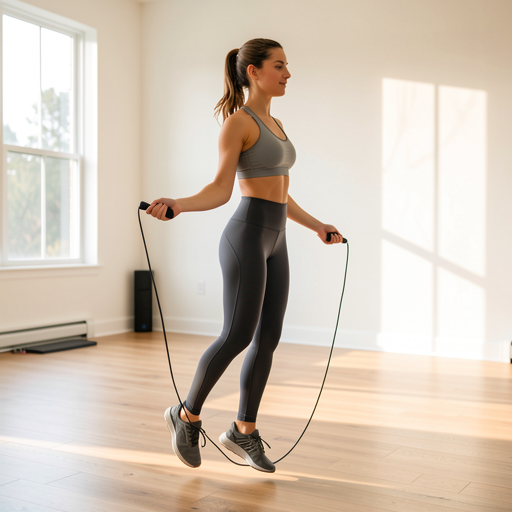
The transverse abdominis fires in a way that closely mimics the stabilization demands of jumping rope, where your entire midsection must stay braced through continuous movement. What makes this exercise particularly rewarding is how it challenges your stability while actively working the core rather than just holding still. If you have the strength, try lifting up onto your toes as you tuck your knees, turning the movement into a dynamic core challenge that tests your balance and control. You should feel the work spread through your deep abdominal walls, not just surface-level tension. This is the kind of exercise that separates people who chase quick ab workouts from those who actually build functional core strength.
📏
Think about how much your core stabilizes when you skip for a solid ten minutes and you will understand why exercises like knee tucks build that same kind of resilient, practical strength. The difference between holding a plank on your toes and holding one tucked between your thighs comes down to whether you are training your body to move or simply train it to endure discomfort. A few important cautions before you start loading up your core sessions with knee tucks. If you feel sharp pain in your lower back or any ache that lingers past the immediate set, stop and reassess your form. Your spine should never feel like it is being crushed and the movement should feel challenging but safe.
🌍
You might be placing too much weight bearing on your lumbar region, which means you need to dial back your repetitions or reduce the range of motion until your core strength catches up. This is not about pushing through pain and it never has been. The knee tuck should feel intense in your abdominal muscles, not punishing in your back. When done correctly, this exercise will strengthen your transverse abdominis more effectively than most movements you will find in a typical workout routine and that matters more than chasing soreness. Building a stronger core is one of the smartest investments you can make in your overall fitness and incorporating knee tucks into your training gives you a tool that works deep abdominal muscles without the wear and tear on your joints.
👩
Just like learning to jump rope efficiently requires patience and gradual progression, mastering the knee tuck demands that you respect your body's limits while still pushing just beyond your comfort zone. Start with conservative reps, focus on clean execution and let your core strength grow naturally over time. You will notice improvements in your stability, posture and athletic performance that extend far beyond what you see in the mirror. Whether you are drawn to the discipline of rope workouts or simply want a solid core to support your daily life, these exercises build the foundation that makes everything else feel easier and more sustainable.